
Pictures of book covers link to the book at Amazon. Required verbiage: “As an Amazon Associate I earn from qualifying purchases.”
The Apocalypse of Being The Esoteric Gnosis of Martin Heidegger. Mario Enrique Sacchi, translated by Gabriel Xavier Martinez, South Bend, Indiana, St. Augustine's Press, 2002.
Arendt and Heidegger The Fate of the Political. Dana R. Villa, Princeton, Princeton University Press, 1996.


Being and God in Aristotle and Heidegger The Role of Method in Thinking the Infinite. Catriona Hanley, Lanham, Maryland, Rowman and Littlefield, 2000.
An excerpt on transcendence.

Being Jewish/Reading Heidegger An Ontological Encounter. Allen Scult, New York, Fordham University Press, 2004.

Between Heidegger and Novalis. Peter Hanly, Evanston, Northwestern University Press, 2021.
Reviews: Sandro Herr

Between Word and Image Heidegger, Klee, and Gadamer on Gesture and Genesis. Dennis J. Schmidt, Bloomington, Indiana University Press, 2013.
In 1956 Martin Heidegger spent a day at an exhibition of Klee's in Basel, deeply impressed. He considered writing an updated companion to the "The Origin of the Work of Art", but never got around to it. Dennis Schmidt takes Heidegger's notes on Klee, and interprets the new significance of art for Heidegger in his later years.
Beyond Subjectivism Heidegger on Language and the Human Being. Abraham Mansbach, Westport, Connecticut, Greenwood Press, 2002.
An excerpt on using Ereignis to overcome the language of traditional metaphysics.
Reviews: Robert Bernasconi

Broken Hegemonies. Reiner Schürmann, translated by Reginald Lilly, Bloomington, Indiana University Press, 2003.
Excerpts: hegemonic fantasms in history.
Complicated Presence Heidegger and the Postmetaphysical Unity of Being. Jussi Backman, Albany, State University of New York Press, 2015.

Continental Divide: Heidegger, Cassirer, Davos. Peter Gordon, Cambridge, MA, Harvard University Press, 2010.

The Culmination: Heidegger, German idealism, and the fate of philosophy. Robert B. Pippin, Chicago, University of Chicago Press, 2024.
Reviews: Dennis Schulting, Sebastian Gardner, Ioannis Trisokkas, Ingvild Torsen, Denis McManus, G. Anthony Bruno

Daimon Life, Heidegger and Life-Philosophy. David Farrell Krell, Bloomington, Indiana University Press, 1992.
Reviews: Michael Eldred
Dasein Disclosed John Haugeland’s Heidegger. John Haugeland, edited by Joseph Rouse, Cambridge, Harvard University Press, 2013.

Delimitations Phenomenology and the End of Metaphysics. John Sallis, Bloomington, Indiana University Press, 1995.

Demythologizing Heidegger. John D. Caputo, Bloomington, Indiana University Press, 1993.

Dialogue with Heidegger Greek Philosophy. Jean Beaufret, translated by Mark Sinclair, Bloomington, Indiana University Press, 2006.
This book is the first of Beaufret's four volume collection of essays on philosophy Dialogue. It contains eight essays on Greek philosophy from Heidegger's perspective. The second volume is on modern philsophy, and the final two engage Heidegger's thought directly. This volume also includes a letter to Heidegger in 1969.
The essays cover the origins of philosophy with the pre-Platonic philosophers, Heraclitus and the Eleatics, and Aristotle on Plato, energeia, tragedy in Poetics, and the "subject" in book Z of Metaphysics. In this latter essay, Beaufret indicates how Aristotle's questioning of the many senses of being continued, after two thousand years, to guide Heidegger's thinking. So much so that it even lead to him changing direction after Being and Time.
An excerpt on the Dass and Was .

Earth and Gods. Vincent Vycinas, The Hague, Martinus Nijhoff, 1969.
The title page says: "Photomechanical reprint 1969". The preface is dated 1959.

Echoes: After Heidegger. John Sallis, Bloomington, Indiana University Press, 1990.
There is a short excerpt on the whatness of Ereignis here.

Eclipse of the Self : The Development of Heidegger's Concept of Authenticity. Michael E. Zimmerman, Athen, Ohio University Press, 2nd edition, 1986.
Ereignis explained.

Encounters & Dialogues with Martin Heidegger, 1929-1976. Heinrich Wiegand Petzet, translated by Parvis Emad and Kenneth Maly, Chicago, University of Chicago Press, 1993.
An anecdote of Heidegger watching soccer on TV.
Reviews: Reginald Lilly

Engaging Heidegger.
Richard Capobianco, University of Toronto Press, 2010.
Foreword by William J. Richardson.
Ereignis, how important is it, really? Is it just another synonym for Beyng? Das Seyn = Das Ereignis? What did Heidegger write about Ereignis in the his 1936-1944 private manuscripts, and say in the 1957-62 lectures?
Reviews: Bret W. Davis
Andrew Ryder
Lawrence Hatab
William Koch
Graeme Nicholson
Richard Velkley

Ernst Jünger’s Philosophy of Technology Heidegger and the Poetics of the Anthropocene. Vincent Blok, London, Routledge, 2017.
An overdue examination of Jünger’s influence on Heidegger. Here are some excerpts on being-at-work in Being and Time, being-at-work from machination, and Heidegger and the gestalt.

The Fate of Phenomenology Heidegger's Legacy. William McNeill, London, Rowman & Littlefield, 2020.
Reviews: David C Abergel

Feminist Heidegger Sex, Gender, and the Politics of Birth. Jill Drouillard, Albany, State University of New York Press, 2025.

The Finitude of Being. Joan Stambaugh, Albany, State University of New York Press, 1992.
Excerpts: the transcendens.
Five Groundbreaking Moments in Heidegger's Thinking. Kenneth Maly, Toronto, University of Toronto Press, 2020.

The Fourfold. Andrew J. Mitchell, Evanston, Illinois, Northwestern University Press, 2015.
Excerpts: truth as the clearing vs. ἀλήθεια, blue is the color of the between, and things gesture world.
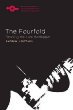
Freedom to Fail Heidegger's Anarchy. Peter Trawny, translated by Ian Alexander Moore and Christopher Turner, Polity, 2015.
Reviews: Martin Woessner

Generation Existential Heidegger's Philosophy in France, 1927-1961. Ethan Kleinberg, Ithaca, New York, Cornell University Press, 2007.
Excerpts: The Heideggers meet the Lacans and Levinas's il y a.
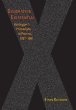
The Glance of the Eye Heidegger, Aristotle, and the Ends of Theory. William McNeill, Albany, State University of New York Press, 1999.
An excerpt on technological thinking.

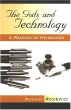
The Gods and Technology A Reading of Heidegger. Richard Rojcewicz, Albany, State University of New York Press, 2006.
Groundless Grounds A Study of Wittgenstein and Heidegger. Lee Braver, Cambridge, MIT Press, 2012.

Hannah Arendt Martin Heidegger. Elzbieta Ettinger, New Haven, Yale University Press, 1995.
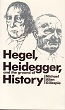
Hegel, Heidegger, and the Ground of History. Michael Allen Gillespie, University of Chicago Press, 1984.
Reviews: Claremont Review of Books.
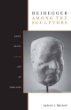
Heidegger Among the Sculptors Body, Space, and the Art of Dwelling. Andrew J. Mitchell, Stanford University Press, 2010.
Reviews: François Raffoul
Eduardo Mendieta.
Heidegger and a Metaphysics of Feeling. Sharin N. Elkholy, London, Continuum, 2008.

Heidegger and Aristotle: The Question of Being. Ted Sadler, London, Athlone Press, 1996.

Heidegger and Aristotle: The Twofoldness of Being. Walter A. Brogan, Albany, State University of New York Press, 2005.
The major themes in Heidegger's reading of Aristotle: from the 1922 preface for Heidegger's unpublished book on Aristotle, to the essay on Physics B1 in Wegmarken, back to lectures in the 1920s, and lectures on Metaphysics Theta 1-3 in 1931.
An excerpt on how Aristotle understood Parmenides.

Heidegger and Christianity. John Macquarrie, New York, Continuum, 1994.
This book comes from a series of lectures given by John Macquarrie, one of a team of two who translated Being & Time (1962) into English. The lectures are an overview of Heidegger's thinking, with the temporal and the historical as a theme. Here's an excerpt on Ereignis.
Reviews: Thomas K. Carr

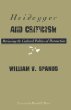
Heidegger and Criticism. William V. Spanos, Minneapolis, University of Minnesota Press, 1993.
Heidegger and Dao Things, Nothingness, Freedom. Eric S. Nelson, New York, Bloomsbury, 2024.
Reviews: Feng Dong Jana Rosker

Heidegger and Ethics. Joanna Hodge, London, Routledge, 1995.
Here's an excerpt on Heidegger's question "Who is humanity?", at the 1936 Rome lecture.

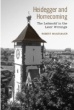
Heidegger and Homecoming The Leitmotif in the Later Writings. Robert Mugerauer, University of Toronto Press, 2008.
This is a six hundred page close reading of the later Heidegger, using homecoming as a theme. Homecoming is at the very center of the fourfold, where staying appropriates.
The text does a useful service in tracing the evolution of the expressions Heidegger used for Ereignis, in their various incarnations (Beyng, the open, the between, the event of appropriation), in the texts from Contributions, through the essays and lectures, to the final seminars.
Heidegger and Kabbalah Hidden Gnosis and the Path of Poiēsis. Elliot R. Wolfson, Bloomington, Indiana University Press, 2019.
This book is about the resonances between Heidegger, especially his later writings, and Jewish esoteric traditions. And it is principally about about Heidegger's texts, not about connecting parts of Heidegger to specific sefirots; it doesn't fold the tzinorots into four. It compares Heidegger's way of thinking with the Kaballah conceptually. The book is meticulously annotated with citations, and quite dense; 450 pages and a 10" height.
Here are some excerpts on Heidegger's debt to Judaism, namelessness and time-space.
Reviews: Shaul Magid

Heidegger and Kierkegaard. George Pattison, Cambridge University Press, 2024.

Heidegger and Ontological Difference. L.M. Vail, Pennsylvania University Press, 1972.

Heidegger and the Contradiction of Being An Analytic Interpretation of the Late Heidegger. Filippo Casati, New York, Routledge, 2022.

Heidegger and the Destruction of Aristotle On How to Read the Tradition. Sean D. Kirkland, New Evanston, Illinois, Northwestern University Press, 2023.
Reviews: François Raffoul

Heidegger and the Essence of Man. Michel Haar, translated by William McNeill, Albany, State University of New York Press, 1993. Forward by Hubert L. Dreyfus.
This is an overview of Heidegger's works by a professor at the Sorbonne. It looks for the central tensions in Heidegger's thinking and the questions they elicit.
A short excerpt on the thought of Ereignis.

Heidegger And The Place Of Ethics: Being-with In The Crossing Of Heidegger's Thought. Michael Lewis, London, Continuum, 2005.
An excerpt on the essence of Ereignis.
Reviews: Leslie MacAvoy

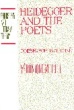
Heidegger and the Poets. Véronique M. Fóti, New Jersey, Humanities Press, 1992.
Heidegger and the Problem of Consciousness. Nancy J. Holland, Bloomington, Indiana University Press, 2018.
More than just a summary of where Heidegger stands in the mind-body split that afflicts so many philosophers, this book deftly follows Heidegger's central issue from his first lectures to his final seminars, and provides a concise summary of what's at issue today.
Here are some excerpts on the lecture course on Plato's Sophist, errancy, and the lecture course on Plato's cave allegory and Theaetatus.

Heidegger and the Problem of Knowledge. Charles B. Guignon, Indianapolis, Hackett, 1983.
Heidegger and the Project of Fundamental Ontology. Jacques Taminiaux, translated by Michael Gendre, Albany, State University of New York Press, 1991.

Heidegger and the Question of Renaissance Humanism Four Studies. Ernest Grassi, Binghampton, New York, Medieval & Renaissance Texts & Studies, 1983.

Heidegger and the Question of Time. Françoise Dastur, translated by François Raffoul and David Pettigrew, New Jersey, Humanities Press, 1998.

Heidegger and the Subject. François Raffoul, translated by David Pettigrew and Gregory Recco, New Jersey, Humanities Press, 1998.

Heidegger and the Thinking of Place Explorations in the Topology of Being. Jeff Malpas, Cambridge, MIT Press, 2012.
Reviews: François Raffoul
Heidegger and the Tradition. Werner Marx, translated by Theodore Kisiel and Murray Kisiel, Evanston, Illinois, Northwestern University Press, 1971.
Heidegger and the Will On the Way to Gelassenheit. Bret W. Davis, Evanston, Illinois, Northwestern University Press, 2007.
Reviews: Frank Schalow

Heidegger and Unconcealment Truth, Language, and History Mark A. Wrathall, Cambridge University Press, 2010.

The Heidegger Change On the Fantastic in Philosophy. Catherine Malabou, Albany, State University of New York Press, 2011.
A Heidegger Dictionary. Michael Inwood, Oxford, Blackwell, 1999.
A dictionary of Heidegger terms in English. Given the disparate translations of the German terms by the many translators over the years, you will have to hunt around to find the English word used to describe a particular term.
Part of the entry that describes Ereignis is here.

The Heidegger Dictionary. Daniel O. Dahlstrom, London, Bloomsbury, 2013.
Heidegger, Art and Postmodernity. Iain D. Thomson, Cambridge University Press, 2011.
This volume collects Dr. Thomson's essays since Heidegger On Ontotheology, all of them revised since their original publication. You can find the original versions of many of them on Iain Thomson's home page. In the book they are connected by its overshadowing theme, overcoming the nihilism in the modern way of being.
The essays are:
Reviews: Lee Braver

Heidegger, Dilthey, and the Crisis of Historicism Towards a New poetics of Dasein. Charles R. Bambach, Ithaca, New York, Cornell University Press, 1995.

Heidegger, Hölderlin, and the Subject of Poetic Language . Jennifer Anna Gosetti-Ferencei, New York, Fordham University Press, 2004.

Heidegger From Metaphysics to Thought. Dominique Janicaud and Jean-François Mattei, translated by Michael Gendre, Albany, State University of New York Press, 1995.
Here's an excerpt that asks "What is Ereignis?".

Heidegger in America. Martin W. Woessner, Cambridge University Press, 2011.

Heidegger in France. Dominique Janicaud, translated by François Raffoul and David Pettigrew, Bloomington, Indiana University Press, 2015.

Heidegger In Question The Art of Existing. Robert Bernasconi, New Jersey, Humanities Press, 1993.
Heidegger On Being and Acting From Principles To Anarchy. Reiner Schürmann, translated by Christine-Marie Gros, Bloomington, Indiana University Press, 1990.
Heidegger on Being Self-Concealing. Katherine Withy, Oxford University Press, 2022.
That being is said in many ways was indicated by Aristotle. That being is self-concealing is one of Heidegger's critical insights. This book analyzes how beings, the being of beings, and beyng are concealed, what is concealed in each case, and what can be discovered. Starting with the "four planks of unconcealment", Withy builds a taxonomy of concealment, unconcealing and unconcealment in chapters devoted to each of the planks. What Heidegger had to say in each case, and how that's been interpreted in the literature is examined, and a structure established. Through an original examination of beyng's self-concealing, Withy explains why the 4th plank can be erased.
Heidegger on Being Uncanny. Katherine Withy, Cambridge, MA, Harvard University Press, 2015.
Heidegger said that in anxiety one feels uncanny about the world. What did he mean? Kate Withy begins the book by summarizing accounts of the uncanny from Freud to the "uncanny valley" in animation, and then turns to Being and Time and expands on Heidegger's analysis of Angst to show that the uncanniness one senses is a part of the inter-play between Dasein's openness and finitude.
The bulk of the book is a study of Heidegger's interpretations of the choral ode in Sophocles' Antigone, principally in Introduction to Metaphysics and Hölderlin's Hymn "The Ister", where he translates δεινόν as uncanny. His interpretations have been a focus of much scholarship, but this is the most thorough study to date and the most satisfying explanation of what Heidegger intended.
The final chapter collects all the explorations of the uncanny by fitting them into Aristotle's four causes, and demonstrating that being uncanny is something that we do when we make sense of the world and ourselves. We are open to possibilities, while limited by our finitude. The uncanny is our awareness of our incomplete understanding of ourselves, in the reciprocal inter-play of presence and absence we find ourselves in.
Reviews: Raoni Padui Taylor Carman

Heidegger on Ethics. Mahon O'Brien, Cambridge University Press, 2025.

Heidegger on Literature, Poetry, and Education after the “Turn”: At the Limits of Metaphysics. James M. Magrini and Elias Schwieler, New York, Routledge, 2018.
This book is concerned with Heidegger's way of thinking after B&T. The first third of the book provides context for the ideas that will be developed, first with an introduction situating what follows within current scholarship, and then with a chapter on the being-historical period of the 1930s and chapter on Heidegger's engagement with poetry, beginning with the Hölderlin lectures in the 1930s.
Having described the later Heidegger's thinking on poetry, the book then applies that to the poems of Tomas Tranströmer and Rimbaud, and Joseph Conrad's Lord Jim. The final chapter turns to meditative thinking and what it means for education.
Reviews: Richard Capobianco, Shawn Loht
Heidegger On Ontotheology Technology and the Politics of Education. Iain Thomson, Cambridge University Press, 2005.
Reviews: Daniel Dahlstrom

Heidegger on Poetic Thinking. Charles Bambach, Cambridge University Press, 2024.

Heidegger On Presence. Richard Polt, Cambridge University Press, 2025.

Heidegger On Religion. Benjamin D. Crowe, Cambridge University Press, 2024.

Heidegger on Technology's Danger and Promise in the Age of AI. Iain Thomson, Cambridge University Press, 2025.
Reviews: Giorgi Vachnadze

Heidegger on the Divine The Thinker, The Poet and God. James L. Perotti, Ohio University Press, 1974.
Heidegger On Thinking. Lee Braver, Cambridge University Press, 2024.

Heidegger's Atheism. Laurence Paul Hemming, Notre Dame, Indiana, University of Notre Dame Press, 2002.
Reviews: Jean Grondin

Heidegger's Being The Shimmering Unfolding. Richard Capobianco, University of Toronto Press, 2022.
The leitmotif of Richard's two earlier books, Engaging Heidegger and Heidegger's Way of Being. The first part has six papers on Heidegger and his pre-Socratic Greek interlocutors, with an interview. There's a translation of an address by Kōichi Tsujimura on Heidegger's 80th birthday and of Heidegger's reply. The last section of the book collects eighteen shorter pieces on a wide variety of topics including Max Müller, Plato, Whitehead, Jung, Melville, Robert Frost, Walt Whitman, Rumi, and Aquinas.
Heidegger's Concept of Truth. Daniel O. Dahlstrom, Cambridge University Press, 2001.

Heidegger's Confusions. Paul Edwards, London, Prometheus Books, 2004.
Reviews: Brent Vizeau

Heidegger's Conversations Toward a Poetic Pedagogy. Katherine Davies, State University of New York Press, 2024.

Heidegger's Gods An Ecofeminist Perspective. Susanne Claxton, London, Rowman & Littlefield, 2017.
It's about time we had a book that explored the import of Heidegger's way of thinking for feminism, and its critique of the current epoch, and hinted at possible paths forward. To wit,
[P]articular terms and their import are also easily linked up with all four of the main areas of concern that constitute the ecofeminist critique: the mechanization and technologization of the body and all natural processes that is part of the mechanistic universe worldview, the commodification of the body and its clinicalization so as to render it in need of product and service by a capitalist industry, value dualisms imposed that impart the female body’s less- than status, and the patriarchal mindset that feels justified in imposing the other three in so far as women’s bodies are considered their territory and ultimately under their purvey and control. Language is indeed the master, as Heidegger says.
Other excerpts on Nietzsche and colliding into new worlds.

Heidegger's Hermeneutics. Egor Falyov, Translated by Jafe Arnold, PRAV Publishing, 2025.
In the German language, “presence” sounds thusly: Anwesenheit. “Anwesenheit” contains “Anwesen,” which means “small homestead,” “allotment.” Being as “presence” as such (Anwesenheit) “wants” to be presencing (anwesen) with-in man, to have in him a caretaker who can cultivate the “field of Being” and gather its fruits.
P. 278

Heidegger's Hidden Sources East Asian influences on his work. Reinhard May, translated by Graham Parker, London, Routledge, 1996.

Heidegger's Hut. Adam Sharr, Cambridge, MIT Press, 2006.

Heidegger's Interpretation of Kant The Violence and the Charity. Morganna Lambeth, Cambridge University Press, 2023.
Reviews: Richard Polt

Heidegger's Language and Thinking. Robert Mugerauer, London, Humanities Press International, 1988.

Heidegger's Later Philosophy. Julian Young, Cambridge University Press, 2002.
Reviews: Daniel Dahlstrohm

Heidegger's Neglect of the Body. Kevin A. Aho, State University of New York Press, 2010.
Heidegger's Ontology of Events. James Bahoh, Edinburgh University Press, 2021.
Heidegger's Phenomenology of Religion. Benjamin D. Crowe, Bloomington, Indiana University Press, 2008.
Here's a short excerpt on meaninglessness].
Heidegger's Philosophy of Being: A Critical Interpretation. Herman Philipse, Princeton, Princeton University Press, 1998.
Review: Stephan Käufer

Heidegger's Philosophy of Science. Trish Glazebrook, New York, Fordham University Press, 2000.
Review: Stephan Käufer

Heidegger's Poietic Writings from Contributions to Philosophy to The Event. Daniela Vallega-Neu, Bloomington, Indiana University Press, 2018.
The first survey of the private books Heidegger wrote in the late thirties, following the evolution of several ideas from Contributions, through Mindfulness, to The Event, with references to the contemporary lectures and other writing.
Excerpts on beings before they're appropriated, changes from Contributions to The Event, and the truth of beyng of the jug.

Heidegger's Pragmatism Understanding, Being, and the Critique of Metaphysics. Mark Okrent, Ithaca, New York, Cornell University Press, 1988.

Heidegger's Technologies Postphenomenological Perspectives. Don Ihde, New York, Fordham University Press, 2010.

Heidegger's Topology Being, Place, World. Jeff Malpas, Cambridge, MIT Press, 2006.
Reviews: David Kolb, Edward Relph, Miguel de Beistegui
Heidegger's Transcendental Aesthetic An Interpretaton of the Ereignis. Tristan Moyle, Aldershot, Ashgate Press, 2005.
Heidegger's Volk Between National Socialism and Poetry. James Phillips, Stanford, Stanford University Press, 2005.
Reviews: Hans Sluga, Andrew Padgett Robin Celikates
Heidegger's Way of Being.
Richard Capobianco, University of Toronto Press, 2014.
This work follows Engaging Heidegger in emphasizing the importance of Being for Heidegger. The guiding theme of this book is that Heidegger principle focus was the truth of Being (die Wahrheit des Seins), a response to the "new paradigm" that Heidegger understood being as meaning; reducing Sein to Sinn. The theme is examined in the light of Heidegger's reflections on Hölderlin's last poems, Aristotle on truth, the 1962 lecture Time and Being, physis in the Greek poet Theocritus and German poet Hebel, Ereignis, and in several of Heidegger's lecture courses. Two of the essays are on the two lecture courses on Heraclitus in 1943 and 1944 (GA 55), which remain untranslated. The fragments interpreted are 16, 123, 93, 50, and 112. Altogether, the book makes a strong case that Heidegger's Sache was and remained Being itself.
Reviews: S. Montgomery Ewegen
Heidegger's Ways. Hans-Georg Gadamer, translated by John W. Stanley, Albany, State University of New York Press, 1994.

Heidegger: His Life and His Philosophy. Alain Badiou and Barbara Cassin, introduction by Kenneth Reinhard, translated by Susan Spitzer, New York, Columbia University Press, 2016.
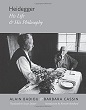
Heidegger: Thought and Historicity. Christopher Fynsk, Ithaca, New York, Cornell University Press, 1993.

Heidegger: Through Phenomenology to Thought 4th Edition. William J. Richardson, New York, Fordham University Press, 2003.
This is a classic in the field, first published in 1963. It discusses most of the texts that had been published in German at that point, when the English translation of Being and Time was barely a year old. There are chapters on the most important texts of the 1920s and 1930s, on the relationship of Heidegger's way of thinking with the philosophers that influenced him, and on the essays published after the war, followed by substancial reference materials.

Historical Dictionary of Heidegger's Philosophy. Alfred Denker, Lanham, Maryland, Scarecrow Press, 2000. 2nd edition, with Frank Schalow, 2010.
This book is a great Heidegger reference book: forty page introduction to Heidegger's Life and path of thinking, two hundred pages of dictionary, followed by a bibliography of Heidegger's works, German-English and Greek-English glossaries, and bibliography of secondary literature categorized by subject areas.
The entry for Appropriation from the dictionary is here.
Human Life in Motion Heidegger's Unpublished Seminars on Aristotle as Preserved by Helene Weiss. Francisco J. Gonzalez, Bloomington, Indiana University Press, 2024.
Husserl, Heidegger and the Space of Meaning Paths toward Transcendental Phenomenology. Steven Galt Crowell, Evanston, Illinois, Northwestern University Press, 2001.

The Incarnality of Being The Earth, Animals, and the Body in Heidegger's Thought. Frank Schalow, Albany, State University of New York Press, 2007.
The Inconspicuous God Heidegger, French Phenomenology and the Theological Turn. Jason W. Alvis, Bloomington, Indiana University Press, 2018.
Heidegger thought and the inapparent (Unscheinbarkeit) through the thought of Jean-Luc Marion, Michel Henry, Jean-Yves Lacoste Lacoste, Jean-Luc Nancy, Dominique Janicaud, Jean-Louis Chretien, and Emmanuel Levinas.
Excerpts on the forgetfulness of oblivion, on Heidegger's phenomenology of the inapparent, and his phenomenology of the inconspicuous.
Intimations of Mortality: Time, Truth, and Finitude in Heidegger's Thinking of Being . David Farrell Krell, University Park, Pennsylvania State University Press, 1986.
The Irony of Heidegger. Andrew Haas, London, Continuum, 2007.
Reviews: Richard Polt
J. Jeremy Wisnewski
Language and &"The Feminine" in Nietzsche and Heidegger. Jean Graybeal, Bloomington, Indiana University Press, 1990.
The Later Heidegger. George Pattison, London, Routledge, 2000.

The Life of Understanding A Contemporary Hermeneutics. James Risser, Bloomington, Indiana University Press, 2012.
A book on hermeneutic convalescence as recovering from metaphysics after the end of metaphysics, and the uncanny in the Antigone Chorus as indicating that an exile is necessary to return home to, and understand, the familiar. Most of the discussion is around Gadamer.
The Madwoman's Reason The Concept of the Appropriate in Ethical Thought. Nancy J. Holland, University Park, Pennsylvania, Pennsylvania State university Press, 1998.

Making Sense of Heidegger A Paradigm Shift. Thomas Sheehan, Rowman & Littlefield, 2014.
Reviews: Laurence Hemming, Ingo Farin (and Sheehan response), Dimitris Apostolopoulos.

Martin Heidegger and the Pre-Socratics. George Joseph Seidel, Lincoln, University of Nebraska Press, 1964.
Here's an excerpt on forgetting of being.
Martin Heidegger European Nihilism. Karl Löwith, editor Richard Wolin, New York, Columbia University Press, 1995.

Martin Heidegger The Philosophy of Another Beginning. Alexander Dugin, translated by Nina Kouprianova, Arlington, VA, Radix, 2014.

Martin Heidegger's Path of Thinking. Otto Pöggeler, translated by Daniel Magurshak and Sigmund Barber, New Jersey, Humanities Press, 1989.
The Meaning of Heidegger: A Critical Study of an Existentialist Phenomenology. Thomas Langan, New York, Columbia University Press, 1959.
Metaphysics and Oppression, Heidegger's Challenge to Western Philosophy. John McCumber, Bloomington, Indiana University Press, 1999.

The Mystical Element in Heidegger's Thought. John D. Caputo, New York, Fordham University Press, 1990.
An excerpt on the rose without why.

Natality and Finitude. Anne O'Byrne, Chicago, Bloomington, Indiana University Press, 2010.

The New Heidegger. Miguel De Beistegui, London, Continuum, 2005.
Six essays on Heidegger. An essay on space-time has an explanation of Ereignis and the changes in thinking both from Being and Time to the Contributions. Towards the end, the essay summarizes the interconnectedness of the both pairs--space and time, and space-time and Ereignis.
There's more on time, space, and Ereignis here.
Reviews: Iain Thomson, Kevin Eldred
The Nomads' Labyrinth. Larry Gomez, CreateSpace, 2013.
The ontology of the shaman's 'drum ivia Heidegger. The book explains the understanding of humans in their world that Heidegger described in Being and Time and other texts. Besides Heidegger, the book also introduces pertinent insights from recent thinkers such a Deleuze, Foucault, Levinas, Derrida, Mircea Eliade, and contemporary anthropologists.
Reviews: Kirkus
Normativity and phenomenology in Husserl and Heidegger. Steven Crowell, Cambridge University Press, 2013.
Reviews: Doug C. Wise

On the Truth of Being, Reflections on Heidegger's Later Philosophy. Joseph J. Kockelmans, Bloomington, Indiana University Press, 1984.

One: Being an Investigation into the Unity of Reality and of its Parts, including the Singular Object which is Nothingness. Graham Priest, Oxford University Press, 2014.

Ontology and Dialectics 1960/61. Theodor W. Adorno, edited by Rolf Tiedemann, translated by Nicholas Walker, Cambridge, UK, Polity Press, 2019.
Table of contents.

The Other Heidegger. Fred Dallmayr, Ithaca, New York, Cornell University Press, 1993.

A Parting of the Ways Carnap, Cassirer, and Heidegger. Michael Friedman, translated by John Baliff, Chicago, Open Court, 2000.

The Paths of Heidegger's Life and Thought. Otto Pöggeler, translated by John Baliff, New Jersey, Humanities Press, 1998.
The translator's comments on Ereignis and Pöggeler on the stages of Heidegger's thinking are here.
Phenomenology of Film A Heideggerian Account of the Film Experience. Shawn Loht, Lantham, Maryland, Lexington Books, 2017.
Articles with Heideggerian interpretations of films have appeared over the years, but this is the first book length study, and its about time. It begins by explaining Heidegger's understanding of phenomenology--"What are the underlying conditions that can afford meaning and intelligibility to beings?"--and then applying it to film, without neglecting to cover the intersections of film and other facets of Heidegger's thinking about ontology and and his confrontation with metaphysics. Chapter 2 applies Being and Time to the experience of viewing and understanding film. Chapter 3 applies Heidegger's later texts on the work of art and technology. Chapter 4 discusses how films can be applied to philosophy and weighs the contributions to the matter by Stanley Cavell, Robert Sinnerbrink, and Stephen Mulhall. The final three chapters use the framework described in the first part of the book to examine some films of Terrence Malick, Michael Haneke, and David Gordon Green.
The text is refeshingly personal for a philosophy book. The author includes details of his path in developing his understanding of film. It is also fairly comprehensive in covering what others have written about Heidegger and film.
Excerpts from the book on: Terrence Malick's Days of Heaven, Michael Haneke's The White Ribbon, and Sergio Leone's Once Upon a Time in the West.
Reviews: James M. Magrini
Philosophy, Revision, Critique Rereading Practices in Heidegger, Nietzsche, and Emerson. David Wittenberg, Stanford University Press, 2001.
Plato and Heidegger A Question of Dialogue. Francisco J. Gonzalez, Penn State University Press, 2011.
Platonic Production Theme and Variations, The Gilson Lectures. Stanley Rosen, South Bend, Indiana, St. Augustine’s Press, 2014.

A Poetics of Homecoming Heidegger, Homelessness and the Homecoming Venture. Brendan O'Donoghue, Newcastle upon Tyne, Cambridge Scholars Publishing, 2011.

Preparatory Thinking In Heidegger's Teaching. Miles Groth, New York, Philosophical Library, 1987.

The Presocratics in the Thought of Martin Heidegger. W. Julian Korab-Karpowicz, Frankfurst am Main, Peter Lang, 2016.

The Quadruple Object. Graham Harman, Winchester, UK, Zero Books, 2011.
The Question of Being A Reversal of Heidegger. Stanley Rosen, New Haven, Yale University Press, 1993.

The Question of God in Heidegger's Phenomenology. George Kovacs, Evanston, Illinois, Northwestern University Press, 1990.
Questioning Martin Heidegger On Western Metaphysics, Buddhist Ethics, and the Fate of the Sentient Earth. Eric D. Meyer, Lanham, Maryland, University Press of America, 2013.
This book approaches Heidegger's thinking on ontology ("What is 'it'? that is neither and both 'being' and 'non-being'") starting from his text "Overcoming Metaphysics", from the Vorträge und Aufsätze collection, 1954. I reaches back to the Greek first beginning and the sophists, engaging with Hegel, Sartre, Derrida and Lyotard. The Insight Into That Which Is lectures also get special attention, providing openings for discussions of technology (man's "skeletal frame or infrastructural apparatus (Das Gestell or Das Ge-Stell)"), a new starting point ("wholistic, multiplicitous, embodied subjectivity"), biosphere ethics, Heidegger's political engagement, and 21th century history.
Here are some excerpts on our technology and the Heart Sutra.
Reviews: Stephen Strehle

A Refreshing and Rethinking Retrieval of Greek Thinking. Kenneth Maly, University of Toronto Press 2024.
Reviews: R.A. Goodrich

The Revelation of Nature. Paul Matthews, Aldershot, Ashgate Press, 2001.

Rosenzweig and Heidegger Between Judaism and German Philosophy. Peter Eli Gordon, Berkeley, University of California Press, 2003.
Reviews: Nitzan Lebovic

Seditions Heidegger and the Limit of Modernity. Heribert Boeder, Translated and Edited by Marcus Brainard, Albany, State University of New York Press, 1997.

A Shoe Story Van Gogh, the Philosophers and the West. Lesley Chamberlain, Harbour Books, Chelmsford, Essex, 2014.

A Short History of Existentialism. Jean Wahl, translated by Forrest Williams and Stanley Mason. New York, The Philosophical Library, 1949.
First published in Paris, this small book is notable for having the first coherent explanation of Heidegger in English. The final chapter is a round-table discussion of existentialism with several philosophers. There's an excerpt with Levinas on the event of being here.

The Song of the Earth Heidegger and the Grounds of the History of Being. Michel Haar, translated by Reginald Lilly, Bloomington, Indiana University Press, 1993.

Strange Wonder The Closure of Metaphysics and the Opening of Awe. Mary Jane Rubenstein, New York, Columbia University Press, 2008.

Technics and Time, 1 The Fault of Epimetheus. Bernard Stiegler, translated by Richard Beardsworth and George Collins, Stanford University Press, 1998.

That Is to Say: Heidegger's Poetics. Marc Froment-Meurice, translated by Jan Plug, Stanford University Press, 1998.
Here's a bit from the book on the eye of Ereignis.

A Thing of This World A History of Continental Anti-Realism. Lee Braver, Evanston, Illinois, Northwestern University Press, 2007.
Here's an excerpt on the tripartite meanings of being.
Reviews: C. G. Prado
Thinking in the Light of Time Heidegger's Encounter with Hegel. Karin de Boer, Albany, State University of New York Press, 2000.

Thinking with Heidegger: Displacements. Miguel de Beistegui, Bloomington, Indiana University Press, 2003.
Six essays on anthropology, history, politics, science and aesthetics.

Thinking theEvent. François Raffoul, Bloomington, Indiana University Press, 2020.
Reviews: Andrew J. Mitchell

The Thracian Maid and the Professional Thinker: Arendt and Heidegger. Jacques Taminiaux, translated by Michael Gendre, Albany, State University of New York Press, 1997.

Time and Death Heidegger's Analysis of Finitude. Carol J. White, Aldershot, Ashgate Press, 2005.
Reviews: Iain Thomson

Time and Trauma Thinking Through Heidegger in the Thirties. Richard Polt, London, Rowman and Littlefield, 2019.
Reviews: Charles Bambach, Ioan Ciprian Bursuc, Karen Feldman

The Time of Life Heidegger and Ethos. William McNeill, Albany, State University of New York Press, 2006.

Towards Another Myth A Tale of Heidegger and Traditionalism. Askr Svarte (Evgeny Nechkasov), Translated by Jafe Arnold, PRAV Publishing, 2024.
Heidegger devotes great attention to interpreting the abyss, connecting it with various elements of his philosophy of the Event (Ereignis) and the Other Beginning. The abyss is the ur-ground as the clearing of the openness and “emptiness,” like χάος. The abyss, the Ab-Grund, has a certain inevitable fate: to be concealed, to be consigned to oblivion, to be covered up by something that is not fundamental (Un-Grund) and which pretends to be the ground.
P. 261

Translating Heidegger. Miles Groth, New York, Humanity Books, 2004.

Tree Leaf Talk. James F. Weiner, Oxford, Berg, 2001.

Truth and Genesis. Miguel De Beistegui, Bloomington, Indiana University Press, 2004.

The Unthought Debt Heidegger and the Hebraic Heritage. Marlène Zarader, translated by Bettina Bergo, Stanford, Stanford University Press, 2006.
Reviews: Peter E. Gordon
The Weirdness of Being Heidegger's Unheard Answer to the Seinsfrage. Ivo De Gennaro, New York, Routledge, 2014.
Reviews: Gary E. Aylesworth Marilyn Stendera

What Is A Human Being? A Heideggerian View. Frederick A. Olafson, Cambridge, U.K., Cambridge University Press, 1995.

Words in Blood, Like Flowers Philosophy and Poetry, Music and Eros in Hölderlin, Nietzsche, and Heidegger. Babette E. Babich, Albany, State University of New York Press, 2006.

Send additions, corrections or whatever to info@beyng.com. Don't forget to put your comments in context (what page, what you are going on about, etc.)! Include your email address so that I can reply.
Back to Heidegger books page.
Back to Heidegger home page.


